Wednesday, 6 August 2014

Ashfaq Kiyani also involved in Election rigging: PTI Deputy Info Secretary


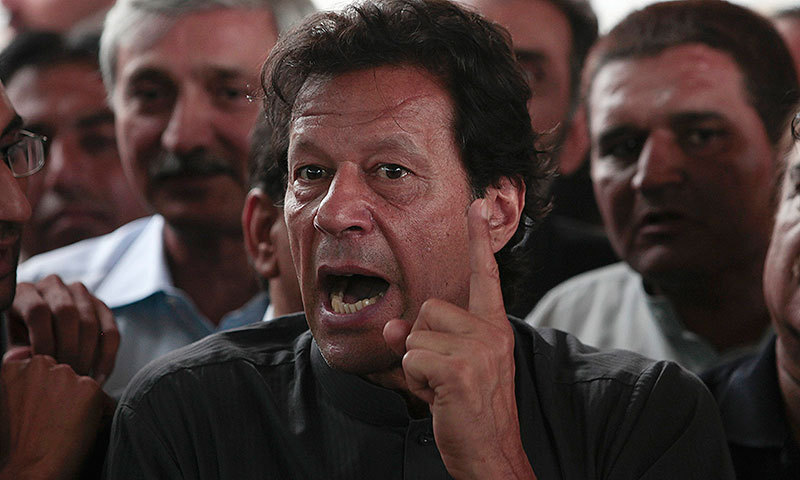
In a latest development, Pakistan Tehreek-i-Insaf (PTI) Deputy Secretary Information Fayyaz-ul-Hassan Chohan has said that former Chief of Army Staff General (r) Ashfaq Pervez Kiyani was also involved in electoral rigging during General Elections 2013.

While talking in a TV talk show on a private TV channel named Roze TV, Deputy Secretary Information PTI said that Ex-Chief of Army Staff was involved in getting Pakistan Muslim League (N) a fake mandate. He alleged that the ‘international establishment’ including the United States of America, United Kingdom, India, United Arab Emirates were involved along with MI-6 and ex-COAS Ashfaq Pervez Kiyani in getting PMLN the fake mandate.

He also accused Chief Minister Punjab Muhammad Shehbaz Sharif and Interior Minister Chaudhry Nisar Ali Khan of going to General Headquarters (GHQ) in ‘dark nights’.


How PMLN doubled its Vote Bank

Pakistan Tehreek-i-Insaf (PTI) Chairman has been raising some extremely invalid points for the last few months in order to prove that the Elections 2013 were rigged. Some of those arguments go something like “Why former Chief Justice of Pakistan (CJP) Iftikhar Muhammad Chaudhry addressed the Returning Officers (ROs)?”, “Why Nawaz Sharif addressed his workers at 10 p.m. on May 11 when only 18 or 19 per cent of results had arrived?” and some others like these. The funniest of these arguments, however, is “How PMLN doubled its vote bank?”. While I can answer all of his questions, I will stick to the funniest one here.
But first take a look at the other two that I have mentioned.

Why ex-CJP addressed the Returning Officers?

Though the CJ may have had a thousand and one reasons for addressing the ROs, I simply have one question to counter this argument of Imran Khan’s i.e. “What difference does that make?”.

Let me explain it a bit.
Pakistan Muslim League (N) and Pakistan People’s Party (PPP) were the dominant parliamentary political parties during the last tenure. These two, along with other parliamentary forces including Awami National Party (ANP), Muttahida Qaumi Movement (MQ), Jamiat Uleam-i-Islam (F) and others, carved out the 18th, 19th and 20th amendments. While 18th amendment was a master-piece in which more than 100 new amendments were passed unanimously by the Parliament it also answered many of the long-standing questions. 17th amendment barred every person who had become two times Prime Minister from assuming the position for the third time, 18th amendment annulled this article. Khyber Pakhtunkhawa (KPK) finally got its name as it was being called as North West Frontier Province for the last 63 years (1947-2010). It took away the power of imposing 58 – 2(b) from the President and made it the sole discretion of the Prime Minister to decide whether he wanted his assemblies to be dissolved or not.

20th amendment was even bigger an achievement when all the parliamentary political forces of the country joined hands to carve out a plan for empowering the election commission. These parties never even mentioned the role of ROs. However, it was Imran Khan himself who asked the judiciary to be a part of the elections and said that he did not trust the ‘government machinery’. That is how the infamous ROs got inducted into our electoral process. The government and the opposition parties wanted the system to be as transparent as it could be and that is why request of a party, which was not even in the parliament, was granted. ROs from judiciary were not the part of the scheme formed by the elected representatives. They were there because Imran Khan asked for them.

Now let’s come back to our original question.
What difference does anyone addressing anyone before the elections make? If Chief Justice addressed the ROs, does it mean he asked them to rig the elections in PMLN’s favor while addressing them? This is ridiculous. OR if PTI thinks that CJ gave them an impression by addressing them that he was the boss and they must obey him in future, then they need to prove that CJ gave them instructions later on. Besides, ROs always were a part of the judiciary. So even if CJ hadn’t addressed them, they already knew he was their boss. What difference then addressing them makes?

The second argument Imran Khan always proudly puts forward is that of Nawaz Sharif addressing his workers at PMLN Central Secretariat in Model Town, Lahore at 10 p.m.

I want to clarify it first that Nawaz Sharif did not address the workers at 10 p.m. He did that at around 11:20 p.m.
Secondly, even the results being shown during his speech portrayed an entirely different picture compared to the one that Khan is trying to portray for the last several months. Watch closely the video embedded below. It clearly shows that results of several of the constituencies had already been decided whereas most of them had had more than 30% results.

Nawaz Sharif Victory Speech by moremag Thirdly, political parties (the good ones I mean here, not the ones whose candidate did not even know the exact locations of their constituencies) are always better equipped than the media when it comes to election results. Candidates remain in touch with their polling agents at all polling stations and get to know about the results immediately after they get decided. On the other hand, media has several other factors to consider. For example, if TV channels showed the result of NA-125 at about 11 p.m. nobody would have been interested in watching the TV anymore. PMLN workers already knew Khawaja Saad Rafique was way ahead of Hamid Khan when the TV channels were showing that Hamid Khan was leading by around 20,000 votes.
So, whining about Nawaz Sharif’s speech can only be a hoax as Imran Khan knows well enough that he is just trying to keep his workers and voters confused. I will come back to it later. Let me first handle the funniest question.

The Funniest Question: How PMLN doubled its lead?

Imran Khan is an amazing character. He assumes some things at times and gets so much convinced about his assumptions that he starts believing them to be facts. He has had dreams, which later turned out to be nightmares, he was going to become the Prime Minister. He mentioned the dream during his March 23, 2013 speech in Lahore. And he was so sure of the truthfulness of his dream that he started considering it to be a divine message. Imran Khan wrote it on a paper that he was going to become the Prime Minister and gave it to Shahzeb Khanzada on a live show after signing it.

I have mentioned the dreams and the other act only to give you a feeling of how Imran is an impossible person to deal with. He has said it on various occasions that he is a ‘solitary animal’. I’m sure that all the fuss is mainly because he day-dreamed of becoming the Prime Minister a bit too much. It seems he has dreamed of this government coming to an end this August and has, therefore, decided to march on to the federal capital on August 14.

These assumptions of his lead him to believe in myths, the realities that never existed, the ghosts that he thinks are real. His parallel universe, the one that he had created for himself, gives him sleepless nights now and makes him believe in things that have nothing to do with facts.

One of those beliefs is that of PMLN doubling its vote bank without a reason. First of all, I will not get into the debate why PMLN was good or why people loved it or why people turned out in massive numbers wherever Nawaz Sharif visited during the election campaign. Here, I will just compare the situation that the PMLN was in during the two elections i.e. 2008 and 2013.

In 2008, Nawaz Sharif and Shahbaz Sharif had returned from exile just one day before the last date of filing the nomination papers. Both the leaders landed in Lahore on 25th of November, 2007, while 26th was the last date of filing the nomination papers. They never got a chance to decide their candidates. Pakistan Muslim League (Q) was in power and had all the big candidates from rural Punjab with it.

Supreme Court of Pakistan, headed by Musharraf’s crony Justice Abdul Hameed Dogar barred Nawaz Sharif and Shahbaz Sharif from contesting the election. So even if there was some sort of PMLN’s wind in urban Punjab it got blew away as the voters realized that their vote will not be able to make Nawaz Sharif the Prime Minister of Pakistan. It is Pakistanis’ psyche and Imran Khan knows it well enough. And if he doesn’t I would challenge him to announce that he won’t be contesting an election in future but will continue to chair PTI and see how his voters react to it.

In 2008, PMLN had been in power for the last five years in Punjab. Its leadership was in Pakistan and was constantly in touch with the workers and the public trend. PMLN started to hunt for the best candidates in the province way before the announcement of the election. By the end of September, 2012, PMLN had decided over 90% of its candidates and even their alternatives and covering candidates were decided.

On the other hand, PTI was busy conducting its intra-party elections as late as March, 2013 when the election was just two months away. PMLN, on the contrary, had got its intra-party elections conducted in 2010. So, it was much better equipped than PTI to understand which candidates were better suited for holding its ticket in the election.

Strong candidates in rural areas were yet another positive for the PMLN. Just for an example, consider Danyal Aziz contesting in Narowal from his local constituency on PMLN ticket. The man has 50,000 votes of his own. During the previous election, the same vote bank went to PML (Q) because his family was aligned with the PML-Q then. Sardar Sikander Hayat Bosan who has beaten former Prime Minister Yousuf Raza Gillani during these elections contested on PML (Q)’s ticket during the 2008 election. He has a personal vote bank of around 60000 votes. His votes, this time, went to PMLN.

PML-Q had secured more than 8 million votes during the previous election. In 2013, their vote-bank has shrunk to less than half of what they got in 2008. Why Imran Khan thinks that PMLQ’s vote bank did not convert to PMLN? After all, it always was Muslim League’s vote bank.

The number of candidates that PMLN filed in 2008 was almost half of the candidates it was able to file in 2013. For the first time, PMLN contested the elections from Pakhtoon areas, where it merely gave support to certain candidates or parties during all the previous elections. In fact PMLN only stood behind PTI during these elections in KPK (PTI’s strongest constituency) with only a difference of around hundred and fifty thousand votes.

Most importantly, Imran Khan said it more than once during his TV interviews and public speeches that 35 million new voters have been added in the electoral process. Though he assumed that all those votes would go to PTI this time, he was quite ill-informed while assuming this because most of these voters lived in rural areas of Punjab and Sindh. His party was never able to reach those areas whereas PML and PPP have been continuously winning the elections in the same areas for several decades.
So if PTI can multiply its vote bank with 45 (it secured around 1.5 lakh votes during 2002 elections and boycotted the 2008 elections) why could PMLN not multiply its vote by only 2?


And finally, I would like to remind Imran Khan that he knew well enough that he was losing the elections from Punjab. Not only Asad Umar, PTI’s showboy and its MNA from NA-48, welcomed the election results just half an hour after Nawaz Sharif’s victory speech but also Senior Vice President PTI Makhdoom Javed Hashmi said after elections that he knew that results would be same and that he had informed PTI leadership as well about it.

But most importantlty, Imran Khan himself said in his lastspeech before Elections 2013 something that shows he knew he was losing in Punjab. His words were “I think KPK has realized, I want you people to understand also that Change is a must”.

And finally, Imran Khan says that PMLN performed so poorly in its tenure, how could it get so many votes.

I will simply ask him to go and check what PMLN did in its tenure from 2008 to 2013 in the field of Education, Health, Infrastructure, Energy and Economic progress on my other post:
What PMLN did from 2008 to 2013 

What PMLN did from 2008 to 2013


MAJOR DEVELOPMENT INITIATIVES COMPLETED
DURING LAST FOUR YEARS IN PUNJAB

During last 4 years an amount of Rs.481.285 billion was utilized under Annual Development Program in Punjab.

§  Rs.196.285 billion for the completion of mega projects costing Rs.200 million and above.

§  Rs.285 billion for the completion of smaller projects.

Year-wise details are as follows:-
Annual Development Program
2008-09 to 2011-12


(Rs. in billion)
Year
Total
Utilization
Mega
Projects completed
(Cost > 200 m)
Smaller
Projects completed
2008-09
132.533
45.726
86.807
2009-10
119.052
47.415
71.637
2010-11
93.909
45.113
48.796
2011-12
135.760
58.031
77.729
Total
481.254
196.285
284.969

Five Years Comparison of Allocations of Major Sectors
Sectors
Total Allocations (Billion Rs.)
2002-03 to 2006-07
2007-08 to 2012-13
Education
11.807
111.278
Water Supply & Sanitation
12.668
43.386
Health
11.371
71.649
Infrastructure Development
104.706
318.493
Southern Punjab
52.750
292.439


Education
  • Performance based incentives for teachers
·         Provision of IT labs to all (4,286) High / Higher secondary schools in the Province (Rs. 4,172 Miilion)
·         Centers of Excellence and Establishment of 10 Nos. Daanish School System to provide quality education to the poor and disadvantaged (Approx. Rs 7,000 Million)
·         Provision of missing facilities in 6,113 School & 23 Colleges
·         Recruitment of 42000 better qualified teachers
·         Provision of solar systems on merit
·         Upgradation of 2788 schools from Primary to Middle and Middle to High level
·         Training of 120,000 Teachers and Managers
·         66 New Degree Colleges established and 13 upgraded from Inter to Degree level
·         10 Billion endowment for Punjab Educational Endowment Fund (PEEF)
·         Laptop scheme for talented students (Over 2 lakh laptops distributed)
·         Establishment of IT University at Lahore
·         Establishment of sub campus of Punjab University at Jhelum
·         Establishment of sub campuses of Sargodha University at Bhakkar and Mianwali
·         Muhammad Nawaz Sharif University of Engineering and Technology at Multan
·         Agriculture Universities at Multan and Burewala
·         Establishment of Women Universities at Multan, Bahawalpur, Faisalabad and Sialkot

Health
·         Establishment of Medical Colleges at Gujrat, D.G. Khan, Sahiwal, Sialkot and Gujranwala
·         Provision of Missing / Additional Facilities in 42 Hospitals in the Punjab
·         Establishment of 3 new THQs
·         Upgradation of 4 RHCs to THQ level
·         Establishment of Services Institute of Medical Sciences, Lahore
·         Establishment of Institutes of Cardiology and Urology at Rawalpindi
·         Establishment of 410 bedded hospital at Bahawalpur (Rs.2,594 Million)
·         New 400 bed hospital at Sargodha
·         New 200 bed hospital at Shahdara (Rs.948 Million)
·         Establishment of Emergency Blocks at 5 DHQ Hospitals
·         Improvement program for all teaching hospitals
·         Introduction of Mobile Health Units in South Punjab
·         Construction of Phase-II Shiekh Zaid Medical College Rahim Yar Khan
·         Construction of Trauma Centre at Bhera Service Area

Water Supply & Sanitation
Some of the major projects initiated / completed under this sector are as follows:-
·          
Sewerage Scheme with Treatment Plant at R.Y.Khan City (Rs.2,526 Million)
·          
Ext. & Improvement  Urban Water Supply Scheme, D.G.Khan city & Adj. abadies (Rs.141 Million)
·          
Ext. & Improvement  of Urban Sewerage Scheme, D.G.Khan (Rs.604 Million)
·          
Kasur Environmental Improvement Project
·          
Urban Water Supply Scheme T.T.Singh
·          
Construction of Urban Water Supply Scheme Gujrat
·          
Urban Water Supply & Sewerage Scheme Pakpattan & Arifwala.
·          
Urban Sewerage/Drainage Scheme Muridke
·          
Urban Water Supply Scheme Muzaffargarh
·          
Comprehensive Water Supply & Sewerage Scheme Mianwali
·          
Comprehensive Water Supply & Sewerage Scheme Khushab
·          
Comprehensive Water Supply & Sewerage Scheme Joharabad
·          
Urban Water Supply & Sewerage Drainage Scheme Samundari
·          
Urban Water Supply & Sewerage Drainage Scheme Phoolnagar, Kasur.
·          
Rehabilitation and Augmentation of Water Supply Scheme, Bahawalpur
·          
Urban Water Supply Scheme with Treatment Plant, Jhelum
·          
Urban Sewerage Drainage Scheme Kamonki.
·          
Comprehensive Sewerage Drainage Scheme Sheikhupura City.
Road
During last four years about 1800 Kms roads were widened from 10-12 ft to 24 ft and 700 Kms new roads were constructed. Some of the major schemes of Road Sector include:
·         Completion of Lahore ring Road 40 kms (Northern Loop).
·         Construction of dual carriageway from Gujrat to Salam Interchange.
·         Dualization of Kasur – Depalpur Carriageway
·         Dualization of Lahore – Kasur Road Section
·         Construction of bridge at Chak Nizam on river Jhelum.
·         Bridge over River Indus between Bangla Ichha and Rojhan
·         Construction 4 Lanes Lahore Wagha Road
·         Dualization of Lahore Ferozepur Road (Lahore to Kasur) Section Km 15.15 to 26.65 length 11.50 Km from Khaira Distributory to Kahna (Pahse-I).
·         Widening / Improvement of SCTM road from Chakwal District Boundary to Mianwali Km No. 176.39 to 216.76 = 40.37 Km in Mianwali District.
·         Improvement of Kahala Bridge Road, L = 25 Kms.
·         Rawalpindi Roads Rehabilitation Project.
·         Widening / Improvement of road starts from L.M.Q. Road and ends at Nawab Pur Road Length 9.52 Kms in District Multan.
·         Widening / Improvement of Jotoi to Karam Dad Qureshi Road, length = 82.00 Kms.
·         Conversion of Main Road leading from Bahawalpur to G.T. road in Dual Carriageway (Bahawalpur - Multan road) Length = 3.35 Km
·         Widening / Improvement of Suraj Miani Road which starts from Katchery Chowk and ends at Northern Bye Pass Length = 4.60 Kms in District Multan.
·         Widening / improvement of Narowal – Shakargarh Road.
·         Dualization of Sialkot – Wazirabad Road.
·         Widening / Improvement of road from Hafizabad to Pindi Bhattian
·         Dualization of Faisalabad - Summundari road (Section between Faisalabad Bypass to Summundari), Faisalabad.
·         Widening / Improvement of road from Faisalabad Bypass road to Mari Pattan, Faisalabad.
·         Construction of flyover to connect N-5 with Bahawalpur City.
·         Construction of Chiniot - Sargodha - Khushab road.
·         Construction of Jhang Bypass.
·         Dualization of Lahore Jaranwala Road.
·         Widening / Improvement of Jhang – Shorkot – Kabirwala Road.
·         Widening / Improvement of Jhang T.T. Sing – Chichawatni Road.
·         Dualization of Eastern Bypass Gujranwala.
·         Widening / Improvement of Pindi Bhattian – Chiniot – Kamalpur Road.
·         Construction of flyover at Thokar Niaz Baig.
·         Construction of Flyover at Kalma Chowk.
·         Construction of Flyover at Muslim Town More
·         Construction of Flyover at Chandni Chowk Rawalpindi.
·         Improvement / Rehabilitation of Multan Road from Thokar Niaz Baig to Scheme Morr.
·         Chief Minister Priority Development Programme 
o   Flyover at 6th Road Junction, Rawalpindi.
o   Construction of Road Bridge between District Mianwali and Jand, District Attock.
o   Construction of Underpass at Abdullahpur, Faisalabad.
o   Construction of Flyover at Peshawar Road near Pirwadai, Rawalpindi.
o   Widening / Improvement of Road from Bahawalpur Byepass to Chungi No.9, Multan, 5.21 Km. (Section Chungi No. 9 - Khayyam Cinema - Old Khanewal Adda Length 1.21 Km, Phase 1)
o   Construction of Flyover on G.T Road in Gujranwala.
o   Bridge on River Ravi Qutab Shahana, District Sahiwal (PC-II).
o   Improvement / Renovation of existing Multan Road, Lahore (Remaining section from Scheme Morr to Chauburji), Length = 3.5 Kms except Sewerage works.
o   Dualization of Arifwala to Bahalwalnagar Road, Length 17 Kms.
o   W/I of Ali Pur Muzaffargarh Road (Section Ali Pur – Shehr Sultan), Length 21 Kms.
o   Construction of metalled road Jail road, D.G.Khan
o   Construction of metalled road Chourata Chowk to Multan Road, D.G.Khan
o   Construction of metalled road from pull dat to college road, D.G.Khan
o   Widening / Improvement from Kallar Kahar to Choa Saiden Shah, Length 30.50 Kms, District Chakwal.
o   Rehabilitation of Gujranwala – Hafizabad Road, Length 41.80 Kms.
o   Widening / Improvement of Tibba Sultan Pur to Luddan Road via Mitroo from Km 9.35 to 43.40 & 44.80 to 65.25, Length 54.50 Kms in District Vehari.
o   Dualization of Hasilpur – Bahawalpur road (Widening / Improvement, Hasilpur – Bahawalpur road Length 76.43 Kms i/c Dualization in Built up area (Length 11.59 Kms), Length 88.63 Kms, District Bahawalpur.
o   W/I Of Chishtian – Dahranwala – Fortabbas Road, length 43.25 Kms, District Bahawalnagar.
o   Construction of Byepass for Khan Pur City from Pakistan Chowk to Grid Station, Length 9.50 Kms, District R.Y Khan.
o   Surveying, Soil Investigation, Feasibility Study and Detailed Design etc of proposed Bridge over River Indus, District Layyah (PC-II).
o   Widening / Improvement of Qaziabad MM Road to Nawan Kot, Length 33.07 Kms, District Layyah.
o   W/I of road from Misri Morr to Khewra via PD Khan (52 Kms, metalled width 24-ft, treated shoulders 4-ft on both sides). Distt. Jhelum
o   Dualization of T.H.A.T road from Jahanian Chowk to Hattian via Motorway Interchange, Length 17.60 Kms, District Attock
o   Construction of high level bridge over River Jhelum at Langarwal Pattan, District Sargodha Khushab. (PC-II)
o   Construction of bridge at Upper Jhelum Canal (Jaggu Pull). Gujrat.
o   Widening / Improvement of road from Adda Jahan Khan to Kotala Jam via 36 Wala Khokha & Samlan Wala More, length 22.00 Kms, District Bhakkar.
o   Construction of Bypass including Widening / Improvement of existing road from Bhakkar Darya Khan road at Shafiq Memorial Hospital to Bhakkar Behal road via Dilkusha Garden Niwani road & Murani road, length 12.60 Kms, Tehsil and District Bhakkar.
o   Construction of road from Qadirabad to Pindi Bhattian via Chak Chatha, length 67 Kms, Hafizabad.
o   Widening / Improvement of remaining portion of Bedian Road including construction of bridge over BRB Canal, Lahore

Irrigation & Power
During the last four years. Eleven small dams in pothohar area were completed benefiting an area of 20,945 acres. Besides lining of channels for about 515 KMs. Improvement in Drainage and flood protection works for 255 KMs were completed. Some of the major initiatives projects of this sector are as follows:
·         Taunsa Barrage Emergency Rehabilitation and Modernization
·         Lower Bari Doab Improvement Project
·         Punjab Irrigation System Improvement Project (PISIP)
·         Construction of Chahan, Sowrra, Arrar, Mughlan and Chera Dam
·         Lower Chenab Canal, LCC Part-B
·         Punjab Barrages Improvement, Phase-II Project (PBIP-II), Jinnah Barrage
·         New Khanki Barrage Construction Project
·         Remodeling of SMB Link Canal

Energy

·         Renewable Energy Development Programme (REDSIP) Construction of Marala Hydel Power Station (Rs 4 bn) and 4 other hydel stations with Asian Development Bank (ADB) assistance. Total 86 Mw generation would be possible with these new schemes.
·         Coal based power plant of 50 MW being set up at Sundar Industrial Estate.

Urban Development
In Urban Development Sector, Government’s strategy was based on making large cities “engine of growth” and Rehabilitation / augmentation of municipal services in the cities
  • During last four years 683 schemes pertaining to improvement of Urban infrastructure have been completed. Some of the major schemes initiated during in last four years are as follows:
o   Completion of Lahore Ring Road Northern Loop
o   Construction of Shalimar Interchange
o   Widening / Improvement of Maulana Shaukat Ali Road
o   Rehabilitation of Roads in Gujranwala, Faisalabad and Rawalpindi Cities
o   Widening / Improvement of Canal Bank Road, Lahore
o   Trunk Sewer from Shadi Pura to Salamat Pura, Lahore
o   Replacement of Outlived Water Supply Lines - Gastroenteritis (23 Schemes)
o   Gastro Projects (4) of WASA , Faisalabad
o   Construction of Northern Bypass Road  from LMQ Road to Bosan Road (Dual Carriageway) with Service Road – Phase-I Multan
o   Water Supply Scheme Phase-VI , Multan
o   Gastroenteritis mitigation programme, Lahore and Gujranwala
o   Widening / Improvement of Roads in Gujranwala City
o   Improvement of Urban Infrastructure in four cities i.e. D.G.Khan, Sargodha, Sahiwal and Chiniot (costing Rs.2.5 bn) under the Urban Renewal Programme for intermediate cities.

Agriculture
·         Promotion of Tunnel Technology for value addition and exports
·         Targeting Food Security through Productivity Enhancement in major crops
·         Farm Mechanization for Food Security
·         Introduction of solar energy pumps for irrigation
·         Establishment of Rice Research Institute at Bahawalnagar
·         In service Training Institute, Layyah
·         Potato Research Institute, Sahiwal
·         Rehabilitation of Water Logged and Salinity Affected Area (Bio Saline-II)
·         Fruit & Vegetable Development Project
·         Punjab Irrigated Agriculture Productivity Improvement Project (PIPIP)(Rs 32 billion)
·         Subsidy for Provision of Green Tractors

Ø  Rs.4.62 billion and Rs.2.099 billion were spent for the rehabilitation of damaged irrigation and road infrastructure respectively in the flood affected areas.

Ø  Rs.9.152 billion was provided for flood relief under Watan Card scheme in flood affected Districts.

…………………………………